
01
Choose the engine
Pick mystery or adventure according to the kind of cause-and-effect the reader should follow.
Comic idea generator
Choose a genre, tone, length and audience. The workshop combines those decisions with an original story seed, then gives you a hook, cast problem, central conflict, reversal and six drawable scene beats. Everything runs in your browser, so there is no account wall and no claim that a hidden text model wrote the result.
Treat the result as a working brief, not a finished script. Keep the parts that create pressure, replace generic details with observations from your own world, and test whether each beat can be shown in a panel.
Working story brief
The generator records this as a continuity anchor. You decide exactly how it enters the scenes.
The page assembles a deliberately small set of editor-written story engines. It does not send your choices to a text-generation service. That constraint is useful: the output is stable, inspectable and honest about where authorship begins.
Output
One structured story brief and six scene beats
Runs
Locally in this browser; no sign-in required
Not included
A finished script, page art or legal rights review
Generate comic story ideas
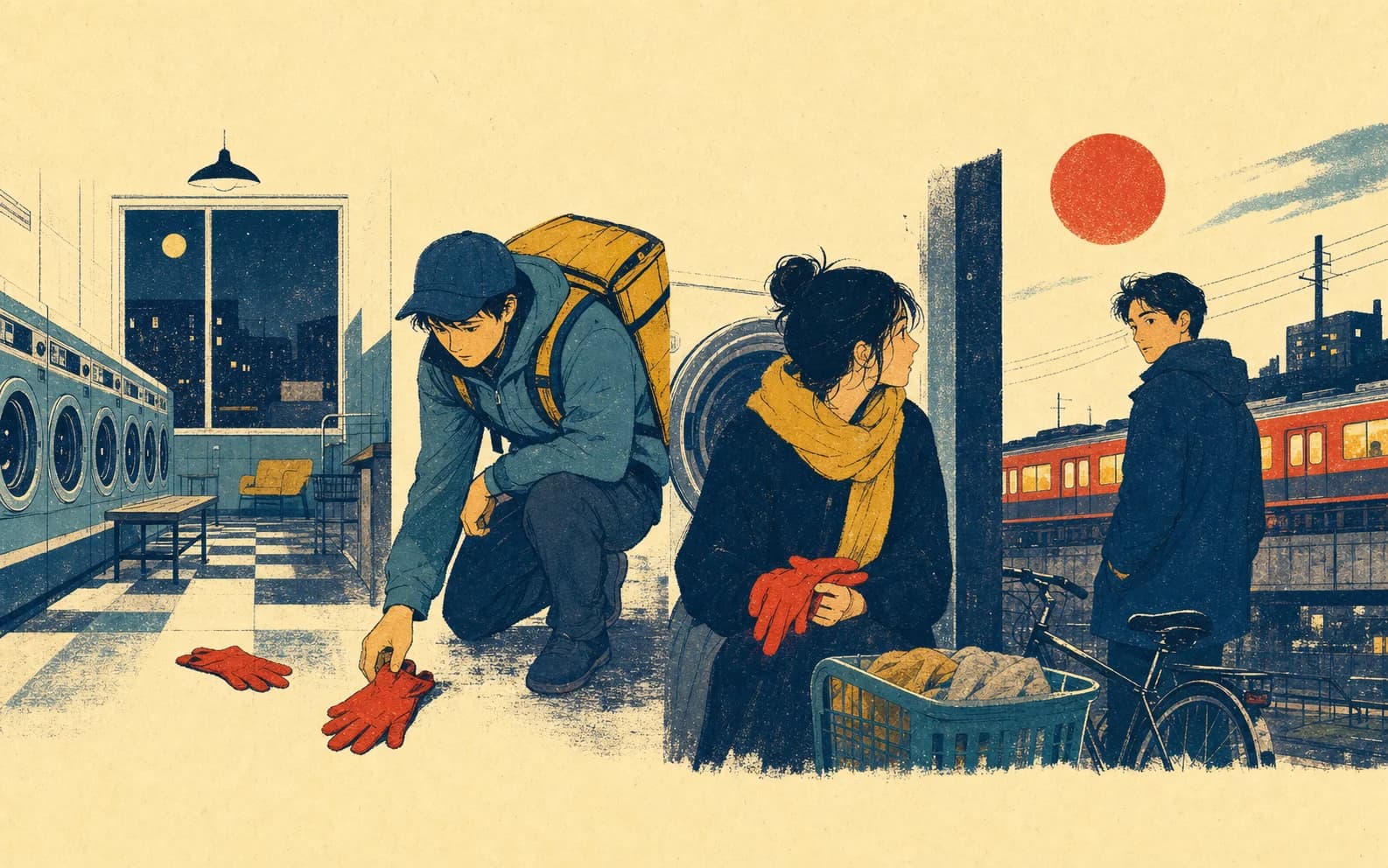
A usable comic premise connects a person, a want, an obstacle and a consequence. Random-word prompts can be entertaining, but they often stop at “a robot, a bakery and a secret.” That is material, not yet a story. Ask what the protagonist is trying to change before the last page, who or what resists that change, and what becomes harder if they wait. The hook should imply motion. “A courier finds tomorrow’s weather on tonight’s route” creates a pattern to investigate, a deadline and a visual contradiction. It also leaves room for the creator to decide what the weather means rather than explaining the whole plot in one sentence.
The generator therefore begins with two tested story engines instead of pretending to produce infinite originality. Mystery organizes information: the reader notices a contradiction, follows evidence, changes a belief and sees the cost of the truth. Adventure organizes action: a disruption creates a route, each obstacle changes the plan, and the decisive choice alters the world the cast returns to. Both can support comedy, romance, horror or quiet drama, but keeping the engine visible helps a short comic avoid becoming a sequence of attractive scenes with no causal link.
When a result feels familiar, do not solve that problem by adding five more concepts. Replace the most generic noun with a detail you know how to observe. A “magical city” might become a river neighborhood where apartment managers mark flood levels on lift doors. A “mysterious object” might become a red glove that is dry on a soaked doorstep. Specificity is not decoration. It gives the artist repeatable shapes, surfaces, locations and behavior that can carry information between panels without narration.
Comic plot prompts by genre
Genre is more useful as a reading contract than as a costume rack. A mystery promises that details can be reinterpreted and that learning the truth changes a decision. An adventure promises movement through escalating obstacles and a return that reveals what the journey changed. A romance centers negotiated intimacy; horror makes safety, the body or trusted knowledge unstable; comedy creates a pattern and then breaks it with consequence. You can mix those promises, but one should organize the page turns. If every scene follows a different engine, the reader cannot tell which details deserve attention.
The visible labels in the tool are intentionally modest. Selecting “mystery” does not ask an unseen model to improvise a thousand plots; it selects an editor-written engine designed around clues, mistaken assumptions and a consequential reveal. Selecting “adventure” chooses a route organized around changing access, physical pressure and ownership. Tone then changes how you revise the material. A warm version can still contain loss, while a tense version still needs moments of ordinary behavior. “Dryly comic” should sharpen observation and timing rather than add jokes to every balloon.
Before drawing, make a one-line genre test for every beat. For mystery: what new fact becomes visible, and how does it alter the working explanation? For adventure: what changes about the route, resources or alliance? If the answer is “nothing, but the image looks impressive,” the scene probably belongs in a sketchbook rather than the final sequence. Conversely, a quiet exchange can earn its place when it changes who knows the secret, who controls the map or who is willing to take the next risk.
Character conflict and story hook ideas
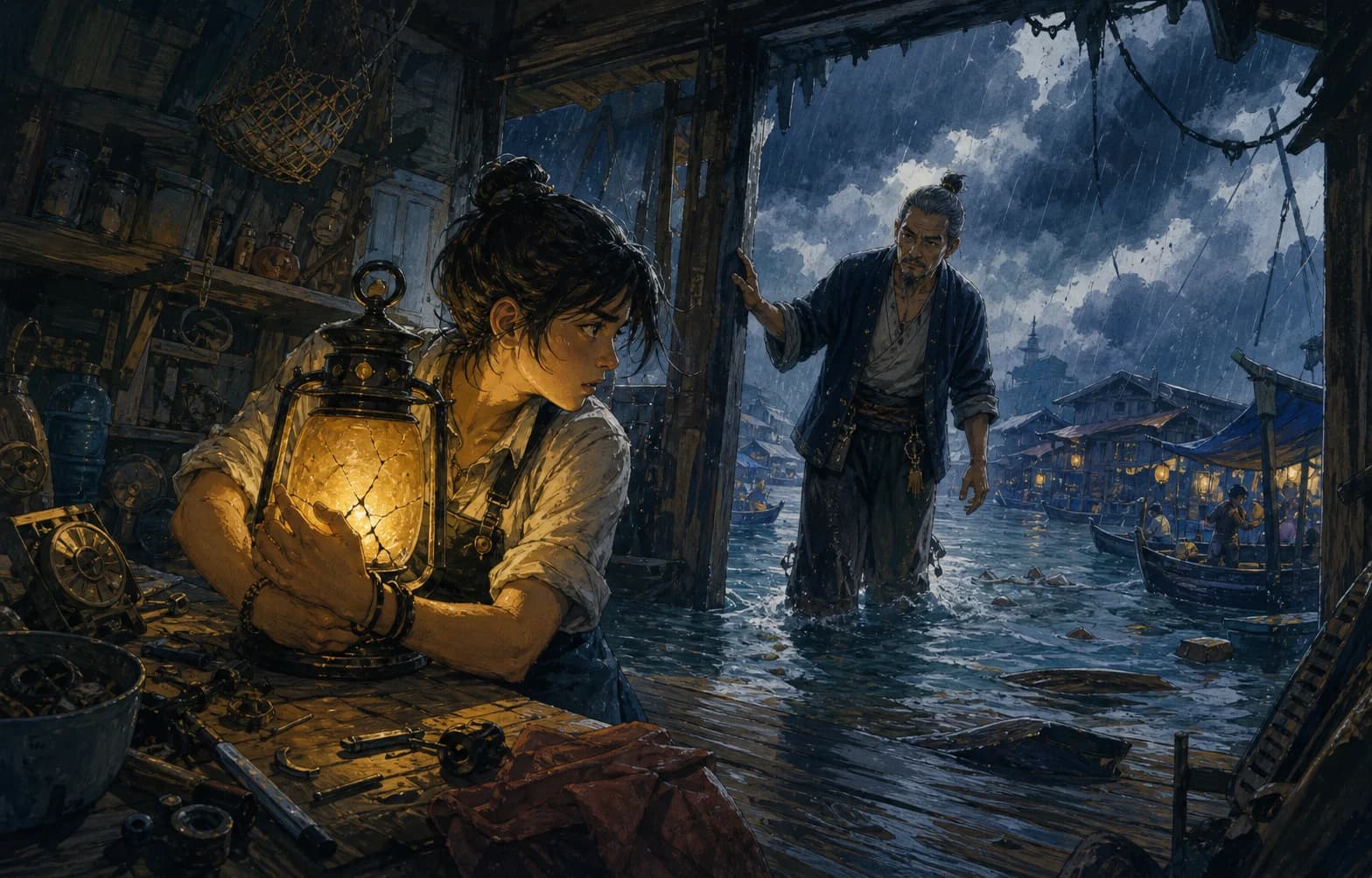
A villain who blocks the hero because the plot needs resistance can hold a scene for a page or two, but rarely supports a memorable short comic. Stronger conflict appears when two people protect different things that cannot both remain untouched. The repairer wants to save the market; the rival wants to expose the private system that keeps it running. Both positions contain care and harm. That tension produces body language, interrupted work, disputed objects and choices under pressure—material the artist can stage—without relying on a speech that announces the theme.
Give each important character three practical facts: what they can do, what they are protecting and what they are unwilling to say yet. Skills make collaboration and action legible. Protection gives the character a reason to resist. Withheld information creates a reveal that can change the plan. Avoid building the entire cast from adjectives such as shy, brave or sarcastic. Those words describe tendencies but do not tell you what someone does when a storm reaches the shop, when a friend lies, or when using the correct tool would expose a family secret.
The protagonist also needs leverage. If only the antagonist can affect events, the lead becomes a witness to somebody else’s plot. Leverage can be a craft skill, a trusted relationship, access to a location, an unusual observation or the willingness to accept a cost others refuse. Let that capacity solve one problem and create another. The courier’s knowledge of routes finds the pattern, but continuing the route worsens the storm. The repairer can restore the lantern, but a perfect private repair would preserve the unjust ownership system.
Turn a comic idea into a scene list
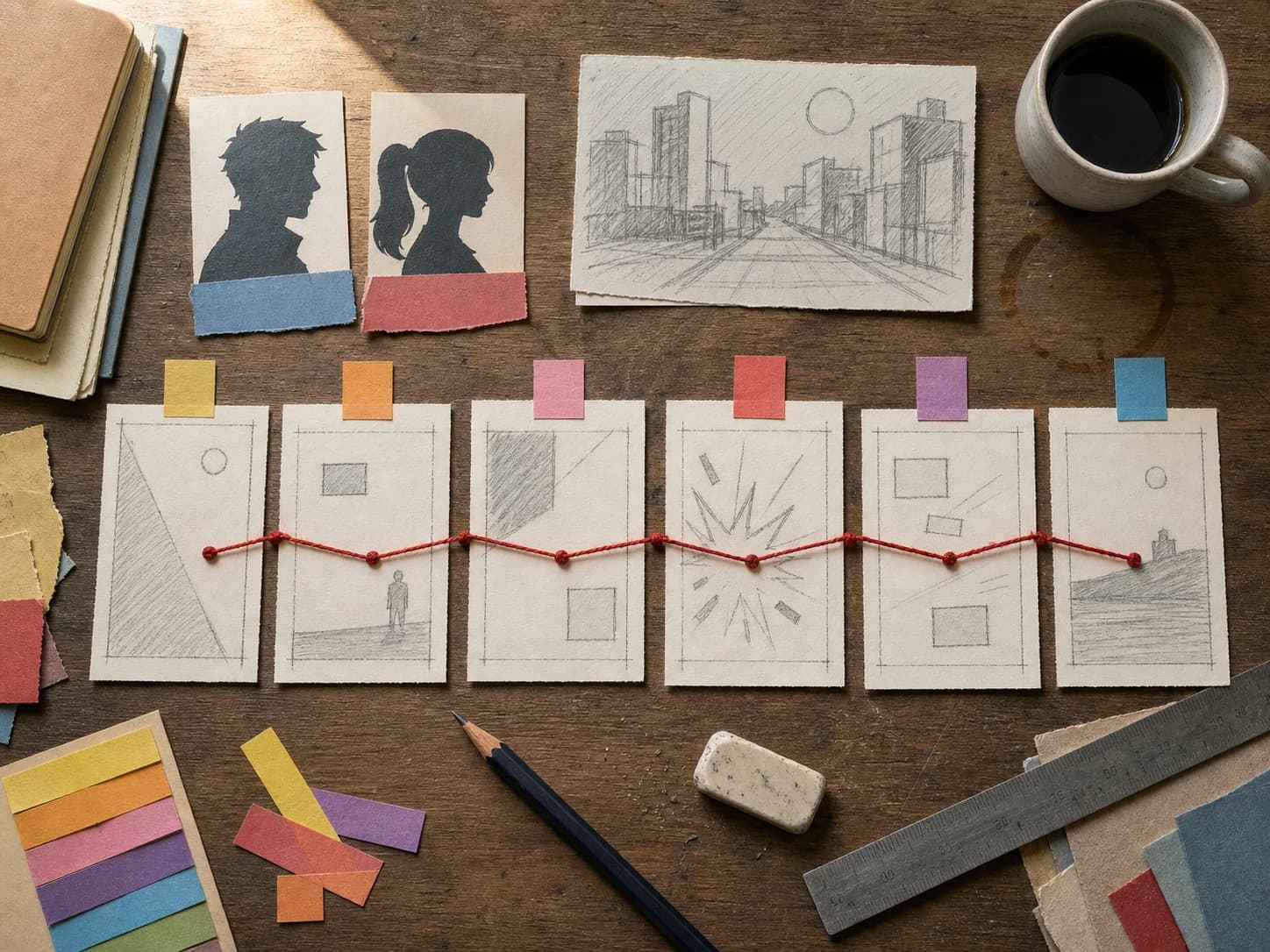
A beat sheet is not a compressed screenplay. It is a chain of changes. Each line should tell you what becomes newly visible, what choice follows and what state carries into the next scene. “They talk about the route” is weak because it does not identify the new fact or consequence. “Ivo’s ledger proves each delivery steals weather from tomorrow; Mara pockets the final address before he can tear it up” supplies evidence, disagreement, action and a changed possession. Those facts can be broken into shots without inventing the scene from scratch.
After generating the six beats, mark the location, participating characters, new information, irreversible action and exit condition for each. Then estimate space according to dramatic weight rather than giving every event an equal page. A four-panel strip may reduce the spine to setup, complication, decision and visual consequence. An eight-to-sixteen-page short can give each major beat one or two pages and reserve a silent page for the central reveal. A chapter can add a failed attempt and midpoint change, but the reader should still feel the original causal spine.
Page turns are editorial tools, not automatic cliffhangers. Place a turn before an image whose meaning benefits from a moment of uncertainty: the underside of the market, the evidence inside the parcel, the person waiting behind the door. Do not conceal routine geography or a line of conversation merely to manufacture suspense. When reading on a vertical phone, the equivalent control is scroll distance and negative space. In either format, reveal timing should serve comprehension and emotion before surprise.
From premise to thumbnail
Thumbnail the sequence at a size small enough that detail cannot rescue a weak decision. Use boxes, arrows and silhouettes to check where characters enter, what they touch, which direction they travel and whether the important object remains identifiable. If two adjacent panels have the same scale and pose, change the staging or combine them. If a reveal requires a paragraph beneath the drawing, decide whether the missing information should become an object, reaction, comparison or earlier setup. A comic should not ban narration, but the picture and the words need distinct jobs.
Read the thumbnails without dialogue. You should be able to identify the protagonist, the immediate problem, at least one changed relationship and the consequence of the final choice. Then read only the dialogue and captions. They should carry voice, thought, context or counterpoint rather than describe hands, doors and expressions the image already shows. This two-pass test catches redundancy early, when moving a panel costs minutes instead of hours. It also makes translation easier because essential plot information is not trapped inside a decorative sound effect or an overfull balloon.
Keep a continuity strip beside the thumbnails: character silhouettes, height relationships, key props, clothing states, damage, time of day and location landmarks. Generated ideas do not solve continuity, and a written outline can hide visual contradictions. If the red glove matters in scene one and scene five, note who holds it, whether it is wet, and which hand is visible. Repetition becomes storytelling when the state changes deliberately; it becomes an error when the artist simply forgot.
Revision
When the first version feels flat, diagnose the layer before rewriting everything. A premise problem means the want, resistance or consequence is vague. A sequence problem means the facts arrive in the wrong order or several beats repeat the same function. A scene problem means the location, action or conversational tactic does not dramatize the beat. A panel problem concerns framing, gesture, clarity or rhythm. Editing at the wrong level creates churn: polishing a reaction shot cannot repair a climax where the protagonist makes no meaningful choice.
The “another direction” control offers a revision lens, not the illusion of an entirely new authored comic. Apply one lens to the same brief and compare. Moving the choice earlier makes room for consequence. Giving the ally a competing goal creates friction without a surprise betrayal. Removing a location can force a recurring object to carry more meaning. Record what improved and what was lost. A controlled comparison teaches you more about the story than collecting twenty unrelated premises and hoping one feels finished.
Ask a reader to recount the sequence rather than rate it. Where did they think the story was going? Which object did they remember? Why did the protagonist make the final choice? What changed afterward? Their reconstruction shows what the pages actually communicate. Avoid explaining the intended version before they answer. If several readers miss the same causal link, add or move evidence; if they disagree in interesting but supported ways, the ambiguity may be productive.
Production and rights
The generated seed is a starting structure written for this tool, not permission to copy an existing franchise, character, artist or living person. Replace any resemblance you notice. Build reference from places and objects you can observe or material you have the right to use. Keep notes on photo sources, licenses, collaborators and major revisions. If the comic is commissioned, agree on ownership, credit, revision limits and publication formats before finished pages make those questions expensive.
Audience choice should affect depiction, not only vocabulary. For all-ages work, danger can be real while harm remains non-graphic and causality clear. Teen work can examine belonging, institutional pressure and identity without assuming every conflict must be romance. Adult work can allow denser consequence and ambiguity, but maturity does not require hopelessness, sexual content or graphic violence. Check the actual rules of a publisher, school, contest or platform; this page does not verify them for you.
Prepare accessible publication assets as part of production. Meaningful images need alt text or an equivalent description appropriate to the platform. Do not put indispensable plot information only in stylized lettering that screen readers cannot access. Test reading order, contrast, balloon size and text at the real display width. For print, obtain the printer’s trim, bleed, color and resolution requirements instead of trusting a generic template. A story idea becomes publishable through these concrete decisions, not through a longer prompt.
Practical handoff
Copy the result into your own document and rewrite it in your words. Keep the hook to one or two sentences. List the cast by function, skill, protection and withheld fact. Reduce the setting to recurring places and visual anchors. Write the central conflict as a choice with two costs. State the reversal as information that changes the plan, not a random surprise. Then number the beats and add location, participants, evidence, action and exit condition. This one-page brief is small enough to revise and specific enough to guide thumbnails.
Next, create a page budget. Assign an approximate number of pages or panels to each beat, leaving room for transitions and reaction. Mark which scenes require research, reference photography, design sheets or sensitivity review. Identify what must remain consistent across pages. If the budget is too large, do not shrink every moment equally; remove a subplot, combine locations or enter the story later. Compression works best when it protects the decisive choice and its consequence.
Finally, decide what success means for this version. A pitch comic may need a compelling opening and stable character design. A classroom strip may prioritize one understandable process. A social comic must remain readable at phone width. A contest entry must satisfy a strict page count. Write that constraint at the top of the brief. The generator supplies a scaffold; craft begins when you choose what the final reader must notice, feel and remember.
01
Pick mystery or adventure according to the kind of cause-and-effect the reader should follow.
02
Use tone, length and audience to define pressure, pacing and depiction rather than surface decoration.
03
Add one object, location fact or physical state that can recur visibly across the sequence.
04
Replace generic nouns, test both sides of the conflict and make the reversal alter a decision.
05
Translate each change into staging, page turns, silent images and readable character action.
06
Ask readers to recount the sequence, then fix the highest structural layer that failed.
The tool selects and recombines editor-written story material locally. It does not claim infinite novelty or private model access.
You still need scene action, dialogue, page allocation, transitions, research and revision.
Tone, length and audience supply revision notes; they do not automatically rewrite every sentence or certify suitability.
Replace familiar details, check unintended resemblance and contribute observations, design and voice from your own practice.
Review licenses, contracts, publisher rules, accessibility and local law for the actual publication.
Yes. The structured generator on this page runs in your browser without an account. It does not consume image credits or send a text prompt to a hidden model.
No. It returns a premise, cast, conflict, reversal and six scene beats. You remain responsible for research, script, thumbnails, dialogue, art, lettering, rights and publication.
Write the protagonist’s concrete want, the resistance, the cost of delay, the evidence that changes the plan and the final choice. Then arrange scenes so each one changes knowledge, access, alliance or consequence.
The seed is provided as a planning starting point, but you must transform it into original work and review contracts, references, licenses, platform rules and applicable law for your project.
The page favors a small number of inspectable, useful structures over fake claims of limitless generation. Mystery and adventure offer different causal spines that can be adapted to many tones.
Replace the broadest noun with an observed detail, give the opposing character a defensible goal, make the choice cost something specific and use a recurring visual object whose state changes.