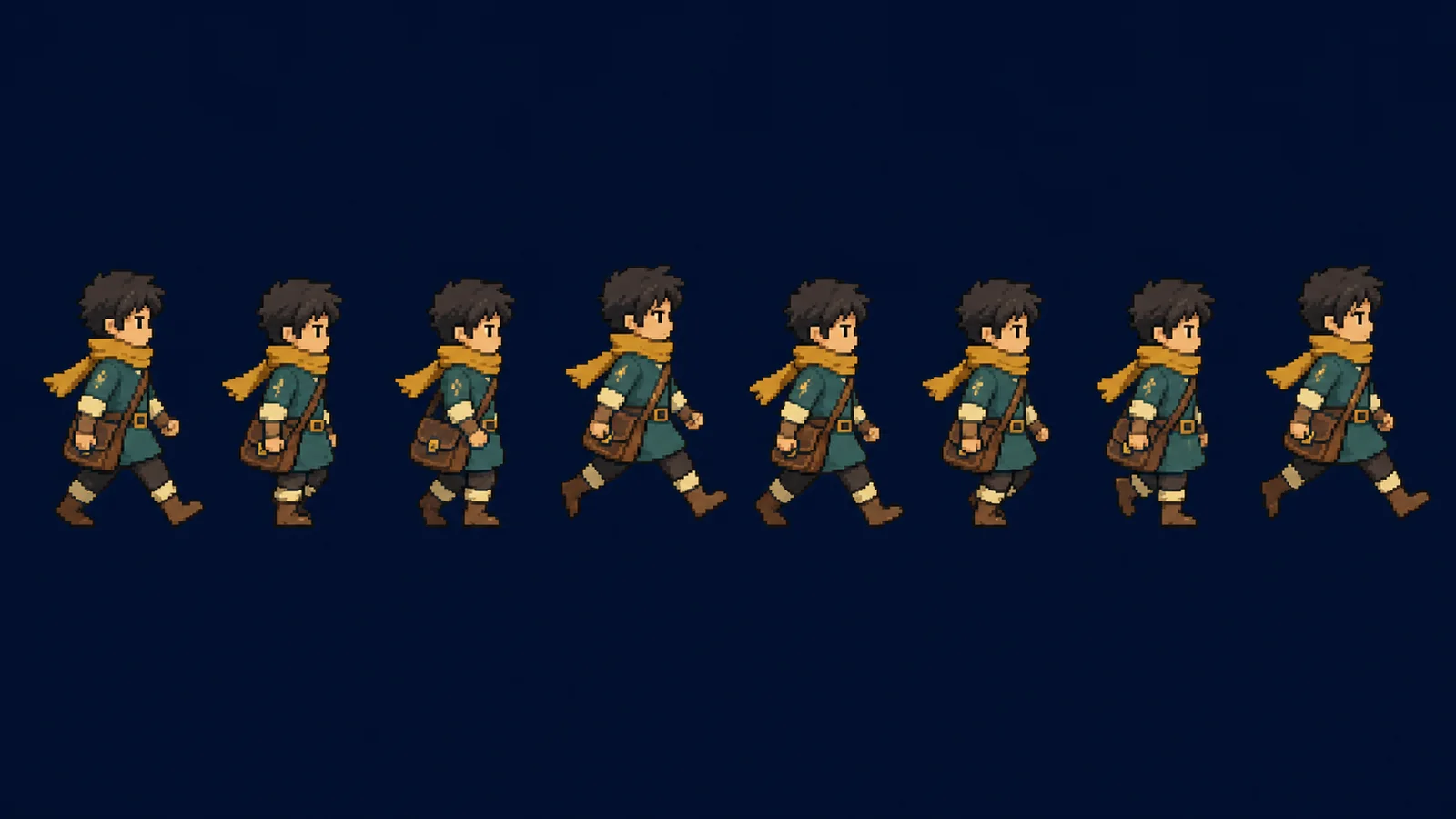
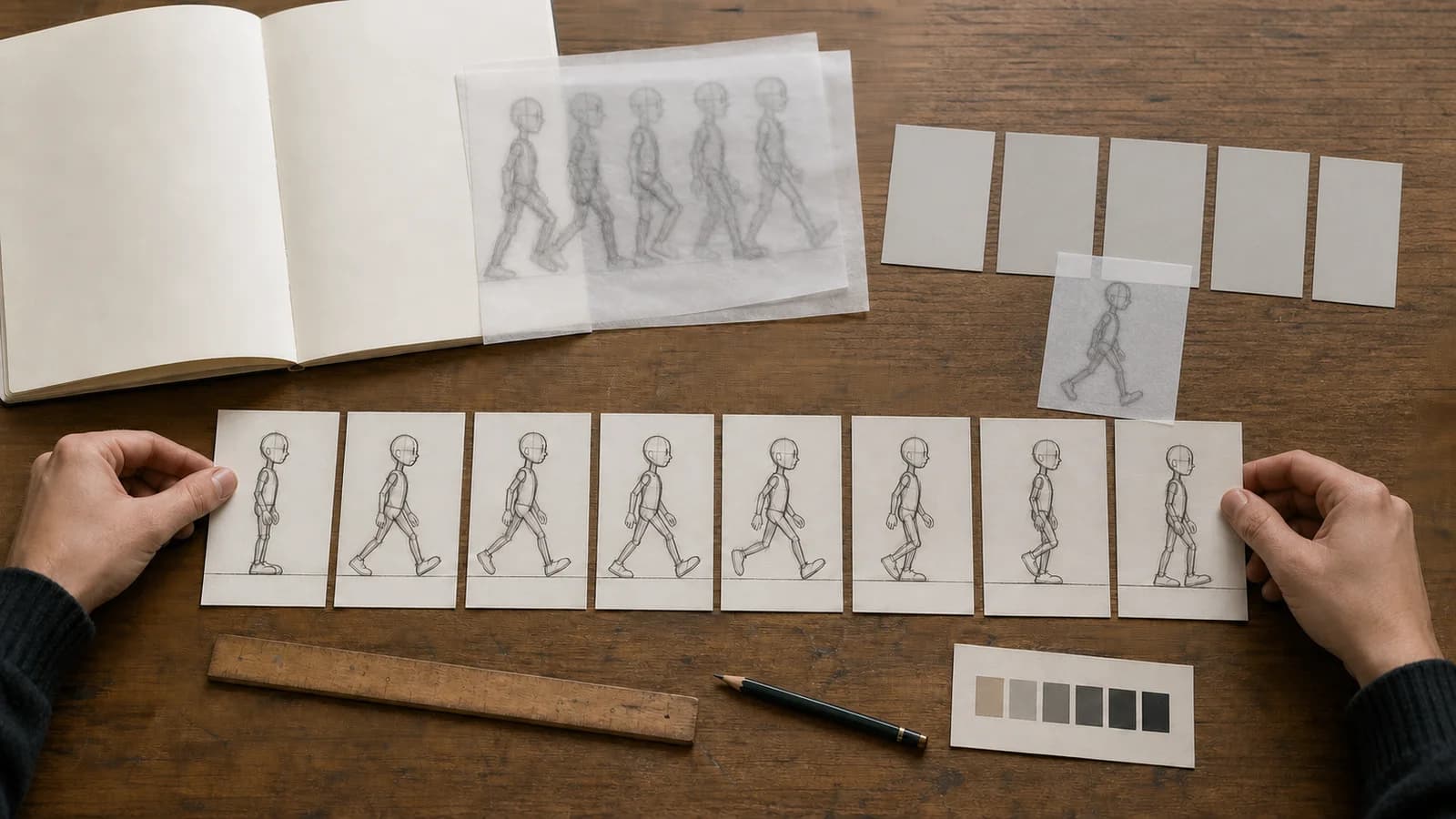
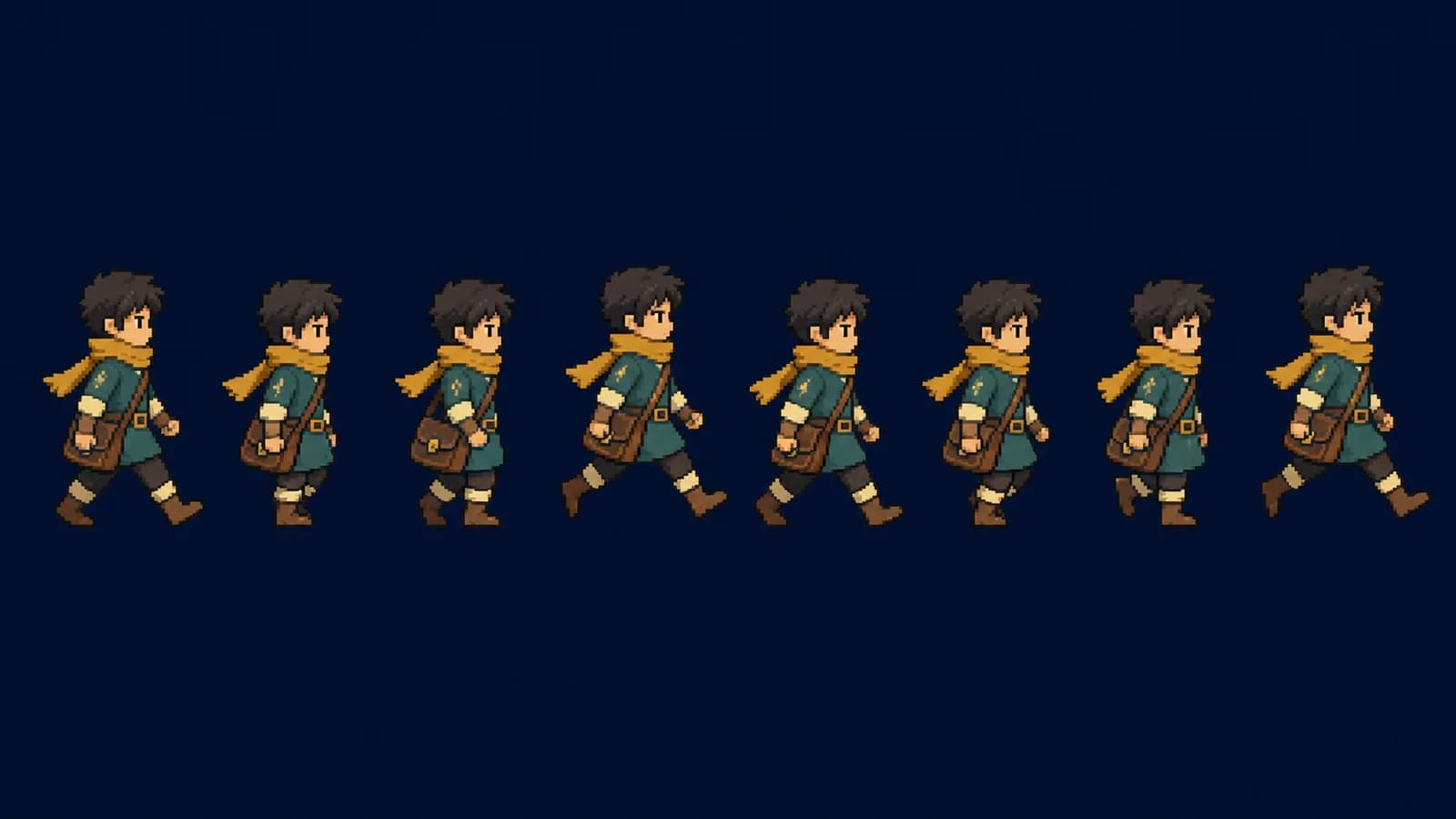
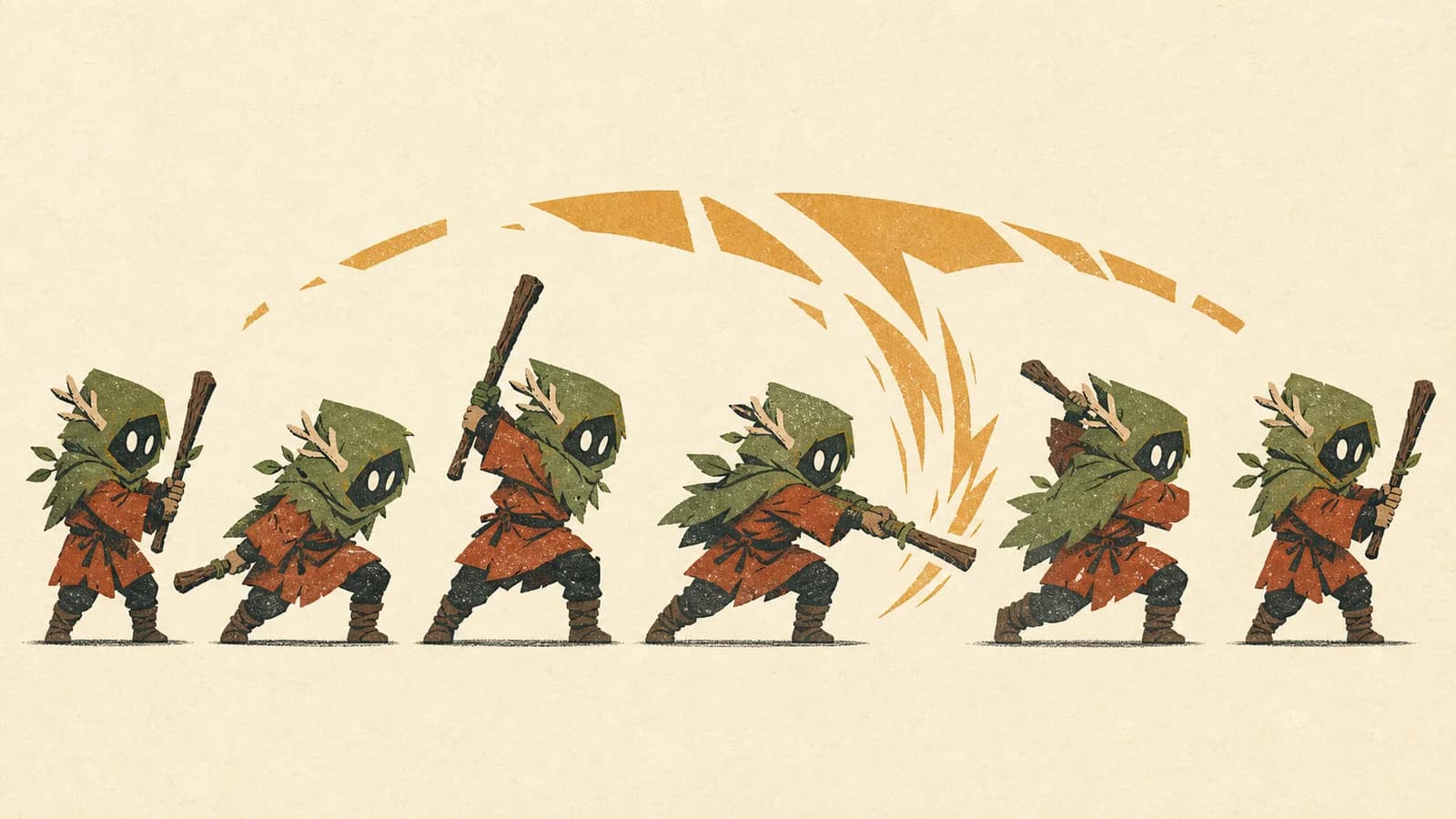
Review each pose as a filled silhouette. At small game scale, the outer contour communicates facing direction, stance, limb separation, weapon orientation, and much of the character’s personality. Separate the feet from each other, keep arms from merging into the torso, and preserve a recognizable hair, hood, helmet, or shoulder shape. A scarf or long coat can support motion, but it should not become a different length in every frame. When the contour fails, adding eyes, buckles, or texture only makes the wrong pose busier.
Write a short identity lock and repeat its nouns exactly: character height, head-to-body proportion, hair mass, outfit silhouette, two or three major colors, signature object, facing direction, and baseline. Do not alternate between synonyms when the prompt is a production brief. After generation, place guide lines at the top of the head, hips, planted foot, and prop attachment. Variation can be part of motion, but unexplained changes in height, costume construction, or viewing angle are drift.
Color continuity should be judged by role, not just by sampled hue. Separate outline, deep shadow, local color, light, and accent so the same parts remain legible across poses. If a sleeve changes from teal to gray because of shading, decide whether that value still reads as the sleeve at gameplay size. A limited palette makes drift easier to detect. When converting a generated high-resolution concept to true pixel art, rebuild the palette and clusters manually rather than trusting a reduction filter to make design decisions.