
01
Name the irreversible choice
Rewrite the premise until the protagonist, public consequence and private cost fit in one precise paragraph.
Graphic novel creator
Develop a story premise into a working long-form plan before you commit months to pages. This browser-based workshop organizes your own inputs into acts, chapter purposes, a compact character bible, visual motifs, continuity checks and a starter scene list. It does not pretend to write or illustrate a complete book for you.
Enter the premise and the production decisions that already matter. The planner uses transparent, deterministic templates—there is no hidden text model—and keeps every result in this tab so you can revise, copy or download it immediately.
Working development document
The output is an editable development brief in your browser. It gives your premise a repeatable structure and exposes unanswered production questions; it does not invent finished scenes, dialogue, drawings or page counts behind the scenes.
Output
Structured text in the page, Markdown and plain-text downloads.
Processing
Local deterministic templates; no account, upload or hidden text model.
Not included
Finished script, generated artwork, page layouts, print PDF or publishing rights.
Create a graphic novel from a story
A workable premise identifies a person, a stable life under pressure, the force that disrupts it and the choice that will eventually become unavoidable. “A city where maps are magical” describes a setting. “An archivist must publish a forbidden route that could restore displaced neighborhoods but expose the promise that kept her family safe” describes a story engine. The second sentence supplies an actor, an objective, a public consequence and a private cost. Those elements give chapters something to change instead of merely giving the artist more scenery to draw.
Before outlining, test whether the conflict can generate different kinds of scenes. A durable long-form conflict can appear as work, argument, travel, discovery, concealment, physical danger and a quiet relationship decision. If every beat requires another person to explain the same secret, the premise is not yet carrying a visual book. Replace abstract stakes with material evidence: keys that stop fitting, a demolished stairwell, an invoice no one can pay, rain revealing an erased street line. The reader should be able to see the pressure before a caption names it.
The planner deliberately preserves your language. It does not disguise a random premise as machine inspiration or fill a manuscript with generic prose. Use its chapter purposes as editorial questions: what changes, who causes it, what becomes more expensive and which earlier image gains a new meaning? Rewrite any generated scaffold that cannot be answered with the specific people and places in your story. The best result is not the longest document; it is a plan that lets you reject weak pages before drawing them.
Long-form visual narrative workflow
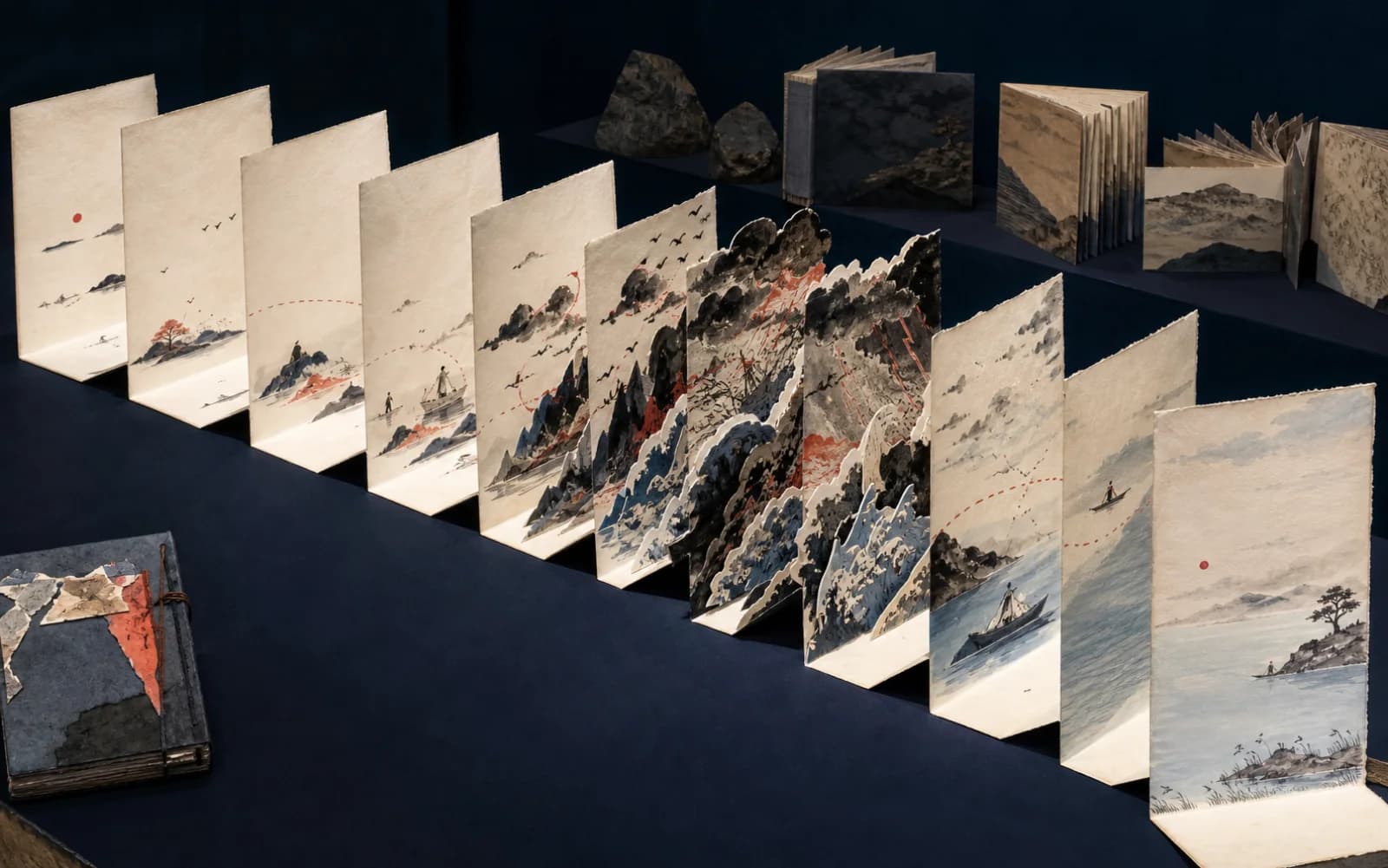
Long-form structure is not a formula for placing identical twists at fixed percentages. It is a way to track irreversible change at several scales. An act changes the available strategy. A chapter completes a local pursuit and alters the next question. A scene changes knowledge, power, intention, relationship or physical position. A page turn controls when the reader receives an image. These layers should cooperate, but they should not all peak at once. A quiet scene can create enormous narrative movement while an action spread can leave the situation unchanged.
Estimate chapters as a planning constraint, not a contract. Divide the initial count into three broad movements, then give every chapter a purpose stated as a change: “Mara gains access to the archive but loses Sato’s protection” is more useful than “Archive chapter.” Check adjacent chapters for repetition. If three chapters end with the protagonist finding documents, vary the method and consequence or combine them. The planner rotates chapter functions to encourage contrast, but only the author can decide whether a beat deserves ten pages, one silent panel or removal.
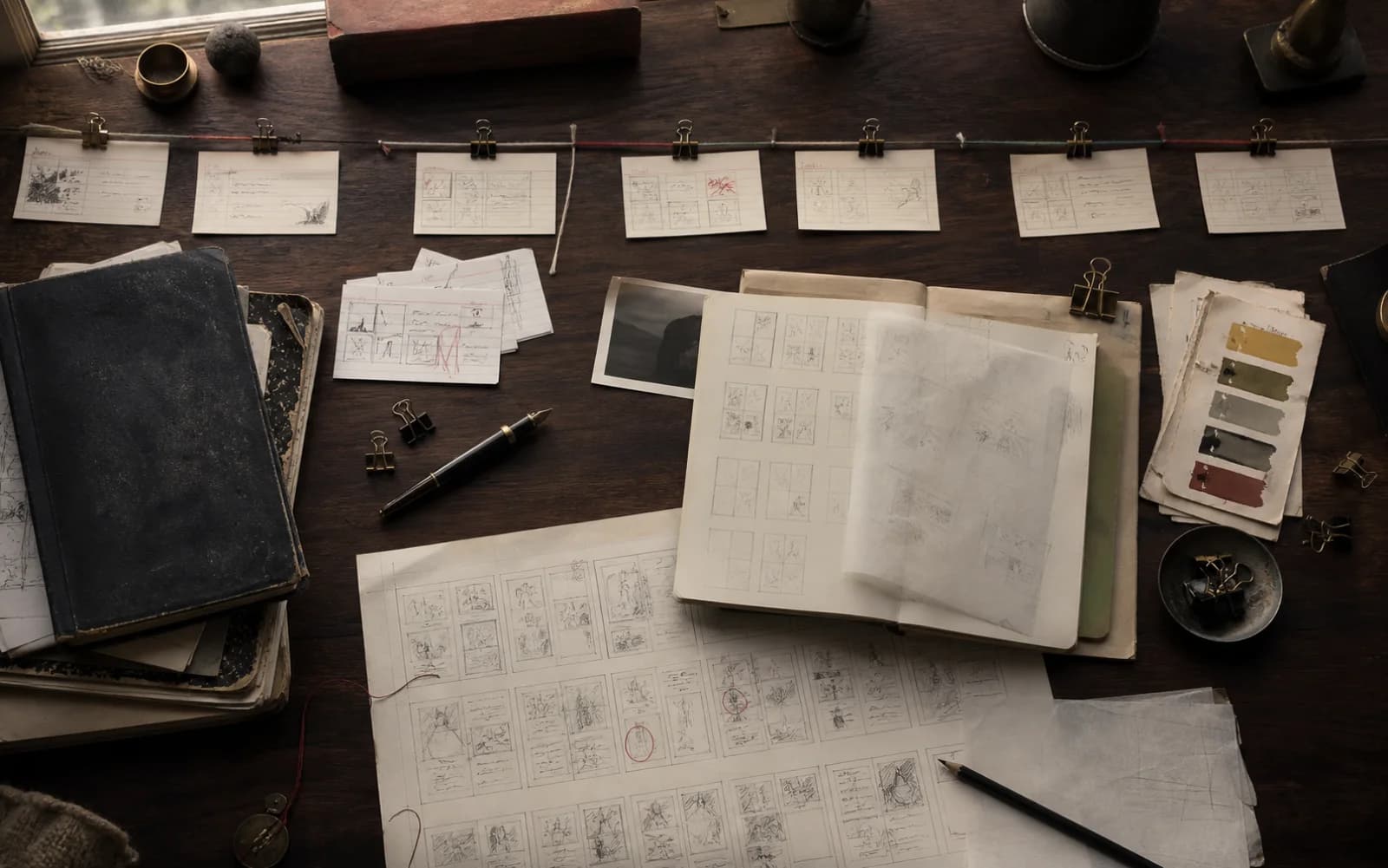
Make a thumbnail map before polished pages. Use tiny rectangles to mark dialogue density, location changes, silent sequences, inserts, full-page images and chapter endings. At that scale you can see whether the middle becomes a wall of similar conversations or whether every dramatic beat is forced into a splash page. Preserve white space and ordinary time around important events. Readers feel escalation partly because the book taught them what calm looks like. A climax without a prior rhythm is simply the loudest page in an already loud manuscript.
Graphic novel character bible
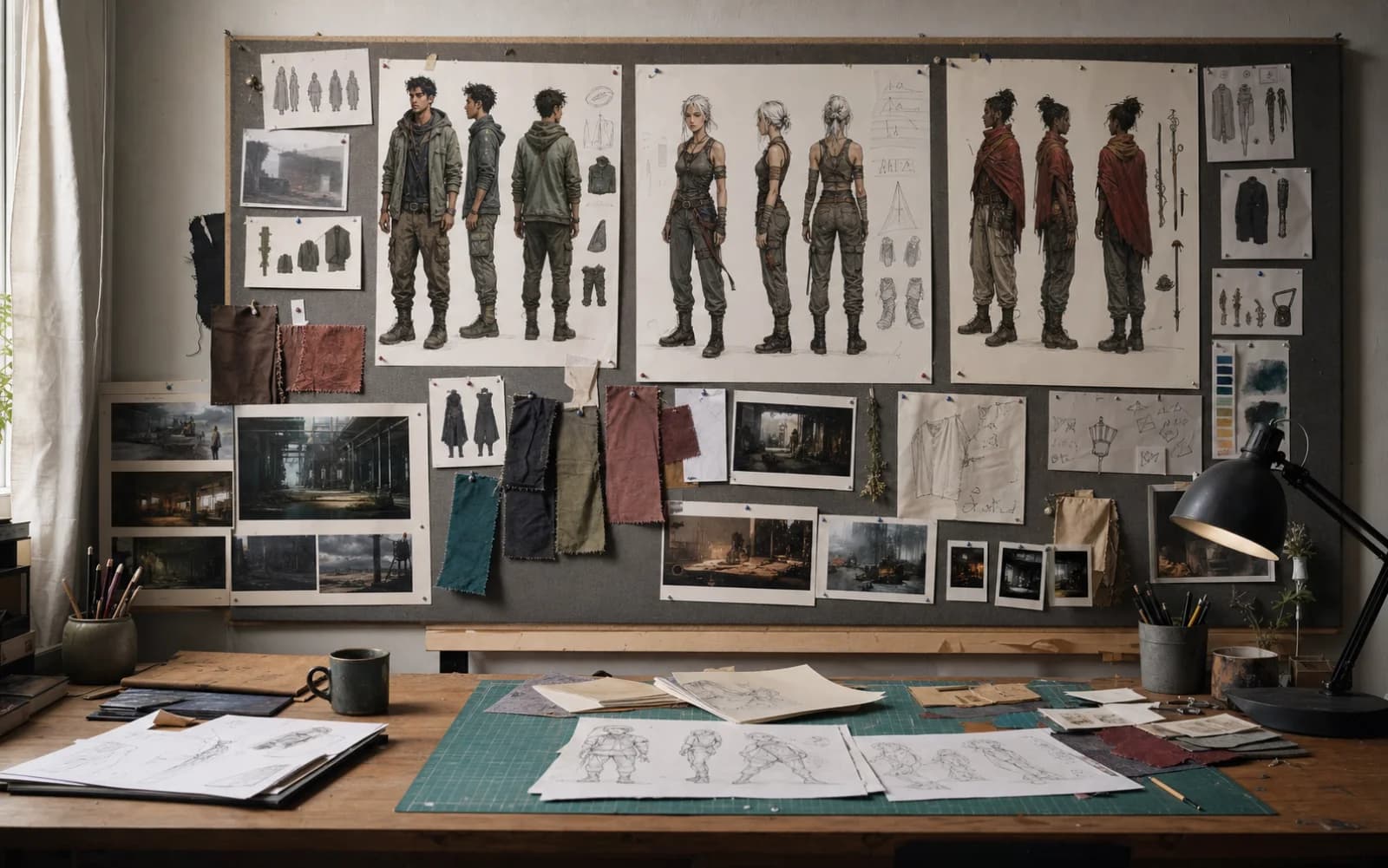
A useful character bible is a production reference. Start with what collaborators must draw and what the plot needs the person to do: height relationship, silhouette, posture, handedness, repeatable clothing, mobility needs, habitual gesture, practical skill and the object they carry. Then record behavioral constraints. What does this person do when they cannot say the truth? How do they enter a room where they have authority? Which choice would feel impossible in chapter one but credible after the midpoint? Those answers guide staging and revision more directly than a childhood biography that never reaches the page.
Separate fixed anchors from changeable states. Hair shape, a work coat and a brass key may be stable design anchors. Wet clothing, a bandaged hand, missing glasses, exhaustion and a borrowed bag are scene states. Track states by chapter so an artist does not repair an injury two pages early or return a prop after it was surrendered. Keep expression studies tied to situations rather than labels alone: not merely “angry,” but “maintains eye contact while realizing the institution will protect itself.” Specific pressure creates more useful acting choices.
Knowledge continuity matters as much as costume continuity. Maintain a table of what each major character believes, what is true, what evidence they have seen and which lie they are protecting at the end of every act. Many draft problems that look like weak dialogue are actually knowledge errors: a person reacts to information they never received, withholds a fact after the reason for secrecy has disappeared or repeats an explanation only for the reader. A compact belief ledger helps the cast remain intelligent even when they are wrong.
Scene and page planning
A scene list is not a miniature novel. Give each entry a location, participants, immediate objective, obstacle, visible turn, exit condition and continuity burden. “They discuss the map” is not enough. “Mara asks Sato for access while replacing damaged labels; he agrees only after noticing the brass key she promised never to bring back” gives the artist hands, props, eyelines, a task and a changing power relationship. It also creates a concrete question for the next scene: what access costs her now that Sato recognizes the key.
Plan the emotional beat and the visual carrier separately. Shame might appear as a character continuing precise repair work while everyone else stops. Reconciliation might be a shared physical task rather than an embrace. The image should not merely illustrate dialogue that already states the feeling. When words and staging perform exactly the same job, one can often be reduced. Conversely, do not force every complex idea into silent symbolism; use captions or dialogue when language itself is the action, evidence or conflict.
Mark transitions while the scene list is still cheap to change. A match cut can connect similar shapes across decades. A repeated location can reveal changed status through who occupies the foreground. A page turn can conceal a new scale, character or consequence. But transitions are not decoration. If a poetic cut obscures where people are or why time moved, add an establishing image or simplify it. Clarity gives experimentation something to push against.
Visual system and motifs
A visual motif becomes narrative when repetition changes its meaning. Red survey thread might begin as an archivist’s measuring tool, become evidence that someone has entered a sealed room and end as a public route stretched across a demolished square. Record first appearance, transformation and payoff. Then decide how prominently it should appear each time. If the motif is centered, brightly colored and explained in every scene, readers stop discovering it and begin waiting for the author to finish pointing.
Build a modest visual grammar for locations and relationships. The archive may use compressed vertical frames and obstructed sight lines; street journeys may open into longer horizontals; conversations with institutional power may place barriers between faces. These are tendencies, not laws. Breaking the rule should mean something. When Mara finally opens the archive windows, a wide horizontal panel has force because the book previously made that space feel narrow.
Test the motif and palette under actual production conditions. A subtle blue-red distinction may vanish in grayscale printing or for readers with color-vision differences. Thin recurring objects may disappear on a phone preview. Pair color with shape, placement, texture or repeated action. Keep swatches with print or display notes, and do not trust a single uncalibrated screen. The planner can remind you to track imagery; it cannot prove that a chosen color will reproduce consistently.
Continuity and revision
Continuity begins before finished art. Track date, time, travel, weather, clothing, injuries, objects, information and promises by scene. Add the source of each fact and the page where it changes. This is not bureaucracy for its own sake: it keeps revision possible. When chapter six moves earlier, a ledger reveals which sunsets, train times, bruises and conversations must move with it. Without that record, artists often repair visible errors while leaving the causal sequence broken.
Use version names that identify project, chapter, page, stage and revision. Keep script, thumbnails, pencils, inks, color and lettering states distinct, with one person responsible for approving each transition. A folder called “final-final-new” cannot tell a letterer whether the balloon placement reflects the latest dialogue. The planner downloads plain text and Markdown precisely because those formats are portable. Move the result into the production system your team already audits, then add owners and dates there.
Review in dependency order. First ask whether the scene belongs, whether the character could make the choice and whether the reader has the required knowledge. Then inspect geography, acting and page rhythm. Only after those pass should the team spend time on anatomy polish, texture or lettering details. Beautiful rendering cannot rescue a chapter whose causal turn is missing. It can, however, make the team reluctant to cut it, which is why structural review should happen while pages are still rough.
Graphic novel vs comic book
“Graphic novel” and “comic book” overlap in everyday publishing language. A graphic novel is often discussed as a book-length, sustained narrative, while comic book can describe the medium broadly or a periodical issue. The labels do not establish literary quality, genre, audience or artistic seriousness. A memoir, fantasy, romance, documentary work and superhero story can all use sequential art. Choose the term that matches the publisher, bookseller, library, audience and release model rather than treating one as an upgrade from the other.
The practical difference is often production shape. A book planned as one complete volume can plant and pay off images across the whole object, control chapter length together and revise early pages after the ending is known. A serialized comic must deliver meaningful units on a schedule, manage recaps and cliffhangers and absorb reader or production feedback before the full story is complete. Collected editions may later alter pacing, covers and transitions. Ask which version is the primary reading experience before locking page turns.
Format also affects trim size, color process, binding, safe areas, spine, paper, file delivery and budget. Those requirements come from the printer, platform or publisher, not from this planner. Request a current specification before final layouts. A development outline can remain format-flexible, but finished balloons and panel details cannot always be scaled safely from a large print page to a phone or from a digital scroll to a bound signature.
Limits, authorship and handoff
This page organizes inputs; it does not generate a manuscript, artwork or publishable book. Its templates cannot judge whether a cultural detail is accurate, whether a scene reproduces harm, whether a mystery clue is fair or whether the emotional ending feels earned. Use readers and collaborators with relevant lived, editorial and production expertise. Document major research sources and distinguish invention from factual claims, especially in memoir, journalism, history, health, law and work based on real people.
A downloaded plan does not clear rights. Record who created or licensed character designs, photographs, fonts, maps, textures and reference material, along with permitted uses and expiration terms. Avoid copying protected characters or asking artists to imitate a living creator’s recognizable style. If the work depicts a real person or organization, get appropriate editorial and legal advice for the intended jurisdiction and distribution. The planner does not inspect inputs or issue permissions.
For handoff, add page estimates, deliverable definitions, file naming, color profile, bleed and safe area, lettering language, accessibility needs, revision rounds, payment milestones and final decision owners. Confirm these with the actual collaborators and vendor specifications. The development document is useful because it exposes questions early; it becomes dangerous if a team mistakes its tidy headings for agreements that were never made.
01
Rewrite the premise until the protagonist, public consequence and private cost fit in one precise paragraph.
02
Give each act a strategy that fails or changes, then distribute chapter purposes without forcing equal length.
03
Separate design anchors from scene states, and track what every major character knows and hides.
04
Record objective, obstacle, visible action, emotional carrier, exit condition and continuity burden.
05
Test page rhythm, locations, dialogue density, page turns and motif repetition at disposable scale.
06
Resolve structural dependencies first, then move approved material into the team’s versioned production system.
It produces a planning scaffold from your inputs, not finished narration, dialogue, captions or a book-length script.
There is no character renderer, panel layout engine, layered source file, print PDF, EPUB or platform upload in this tool.
Inputs and results live in the current tab. Download or copy the plan before closing, reloading or clearing the page.
Templates cannot determine whether the story is coherent, culturally responsible, original, accurate or ready for publication.
Rights, contracts, disclosures, trim, color, bleed and delivery requirements must be confirmed with qualified people and current vendors.
No. It creates a structured development document from your premise, conflict, cast, motifs and estimated chapter count. You still write, draw, letter, edit, proof and package the work.
No. The current tool runs deterministic editorial templates in your browser. The method note in every result makes that behavior explicit.
There is no universal count. Chapters should create useful reading and production units. Start with the tool’s estimate, then merge or split units when the actual scene and page rhythm demands it.
Include drawable design anchors, scene states, practical skills, behavior under pressure, relationships, knowledge by act, props, costume versions and the choices that define the arc.
Many teams benefit from a full rough script and complete thumbnail pass, but workflows differ. The important point is to test the ending and major dependencies before expensive final rendering locks weak decisions in place.
The terms overlap. Graphic novel often signals a sustained book-length work; comic book may describe the medium generally or serialized issues. Release model and production requirements matter more than status.
No. Copy and download actions are performed in the browser from the current result. The tool does not create a server project or recovery copy.
The template itself does not grant or restrict rights in your story, but you remain responsible for the rights, contracts, source material, references, laws and platform terms that apply to the actual project.