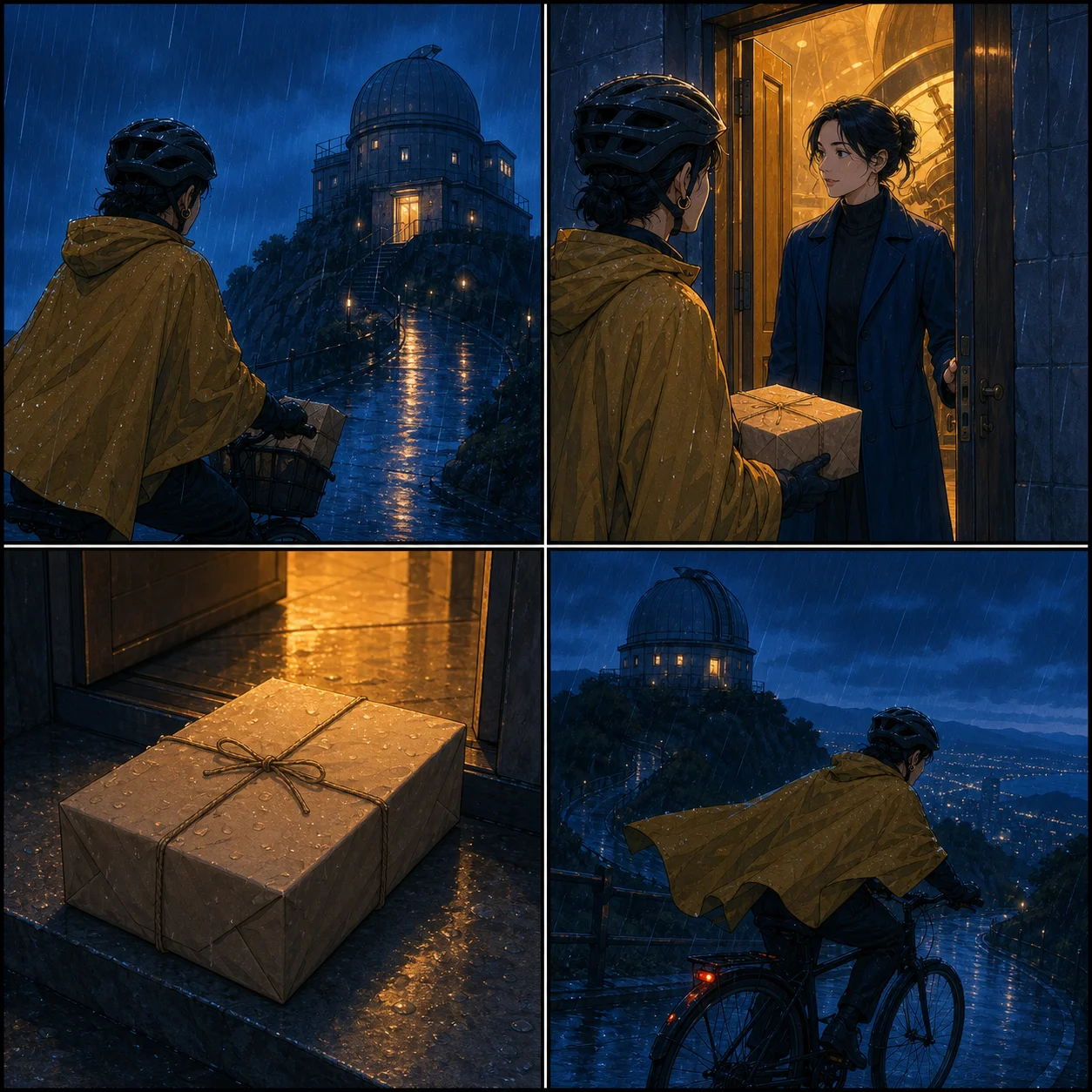
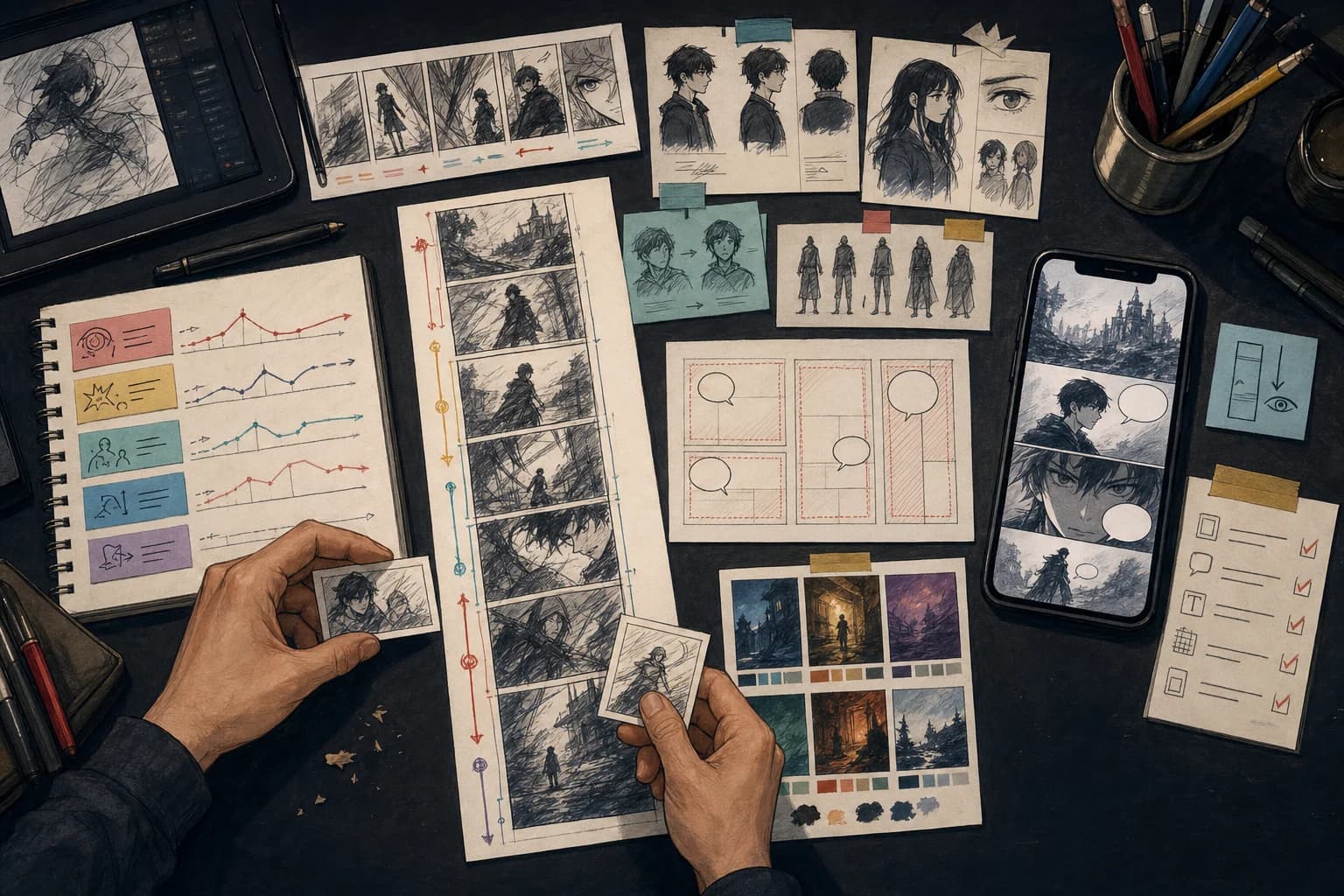
Perform a silent read first. Hide the script and ask what happened, who acted, what changed, and where the eye goes next. If the sequence depends on explanatory dialogue, revise poses, inserts, geography, or shot order. Then inspect continuity: face, hair, hands, clothing, props, scale, light direction, door positions, and weather. Mark corrections on a duplicate rather than trying to remember them while repainting.
Next, test small-size legibility and values. Convert a copy to grayscale, reduce it to phone width, and look for merged silhouettes, muddy faces, lost props, and competing highlights. Color can distinguish moods and characters, but it should not be the only carrier of important information. Check that a reader with reduced color discrimination can still follow the action through shape, position, contrast, or text.
Finally, inspect unwanted artifacts and unintended meaning: broken fingers, duplicate objects, pseudo-lettering, accidental logos, confusing uniforms, stereotypes, protected designs, and details that could misidentify a real place or person. A plausible image is not automatically publishable. Keep a correction list, document what was generated and what was redrawn, and obtain editorial, cultural, legal, or subject-matter review when the story context makes it necessary.