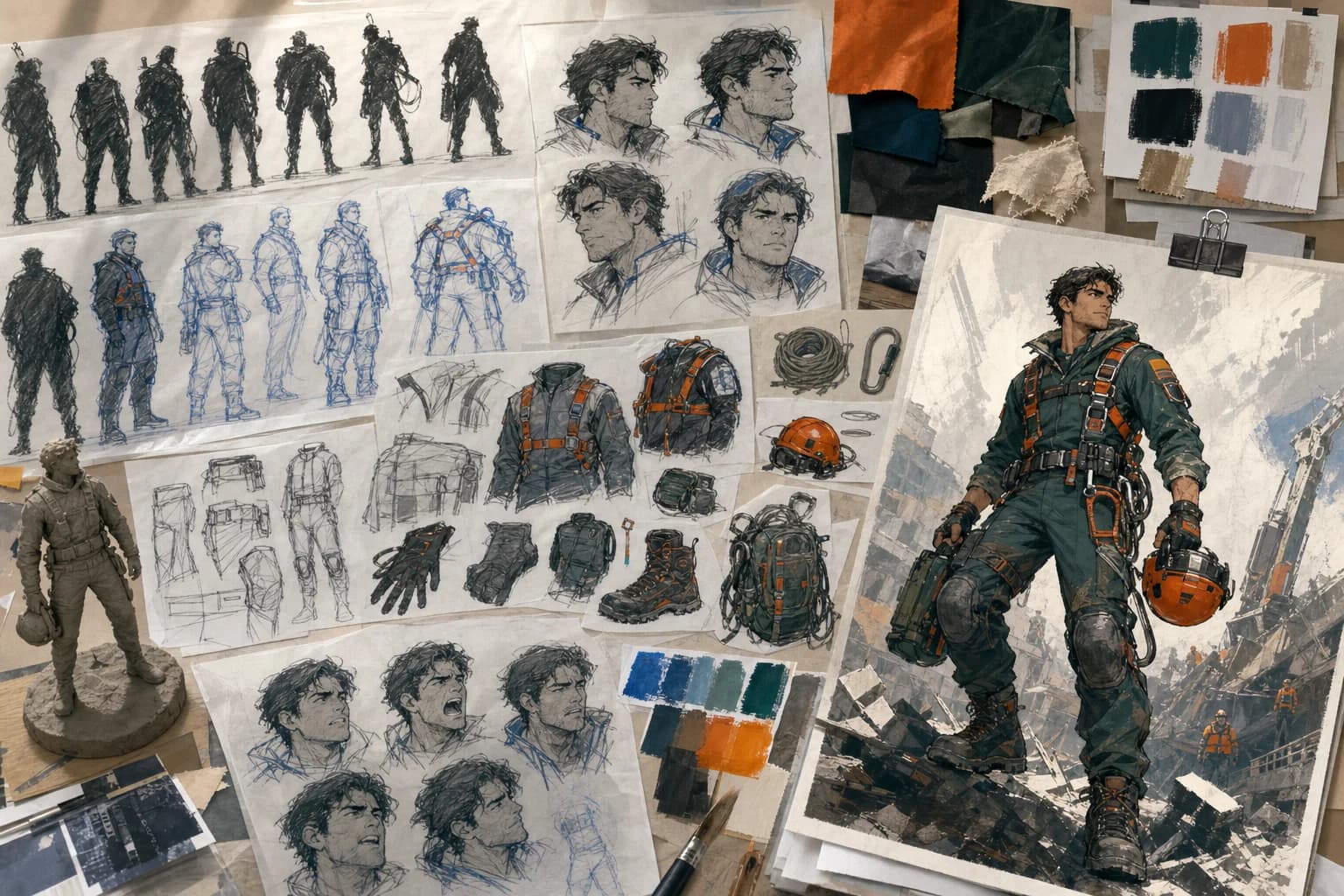
Draw front, side, back, and three-quarter views at the same scale and neutral posture. Align eye line, shoulder, elbow, wrist, hip, knee, and ankle guides. Reconcile every seam, pocket, closure, hair mass, and prop attachment across views. If an element cannot be explained from behind, redesign it rather than hiding the conflict. Add close details only where construction is not obvious at the main scale.
Include a palette with stable values and material notes, not just color names. Record skin, hair, eyes, base clothing, accents, metal, and common lighting adjustments. Add height relationships with important cast members and everyday objects. Show approved expressions, hand shapes, prop interactions, costume states, and prohibited mistakes. A concise “do not” panel can prevent more drift than another decorative rendering.
Version the sheet. Story events may change hair, equipment, scars, uniforms, age, or ability. Label the timeline and keep previous states rather than overwriting the only reference. Store the character brief, corrected master, turnarounds, expressions, palette, props, sources, rights notes, and generated explorations together. The goal is a dependable production record that survives collaboration and time pressure.