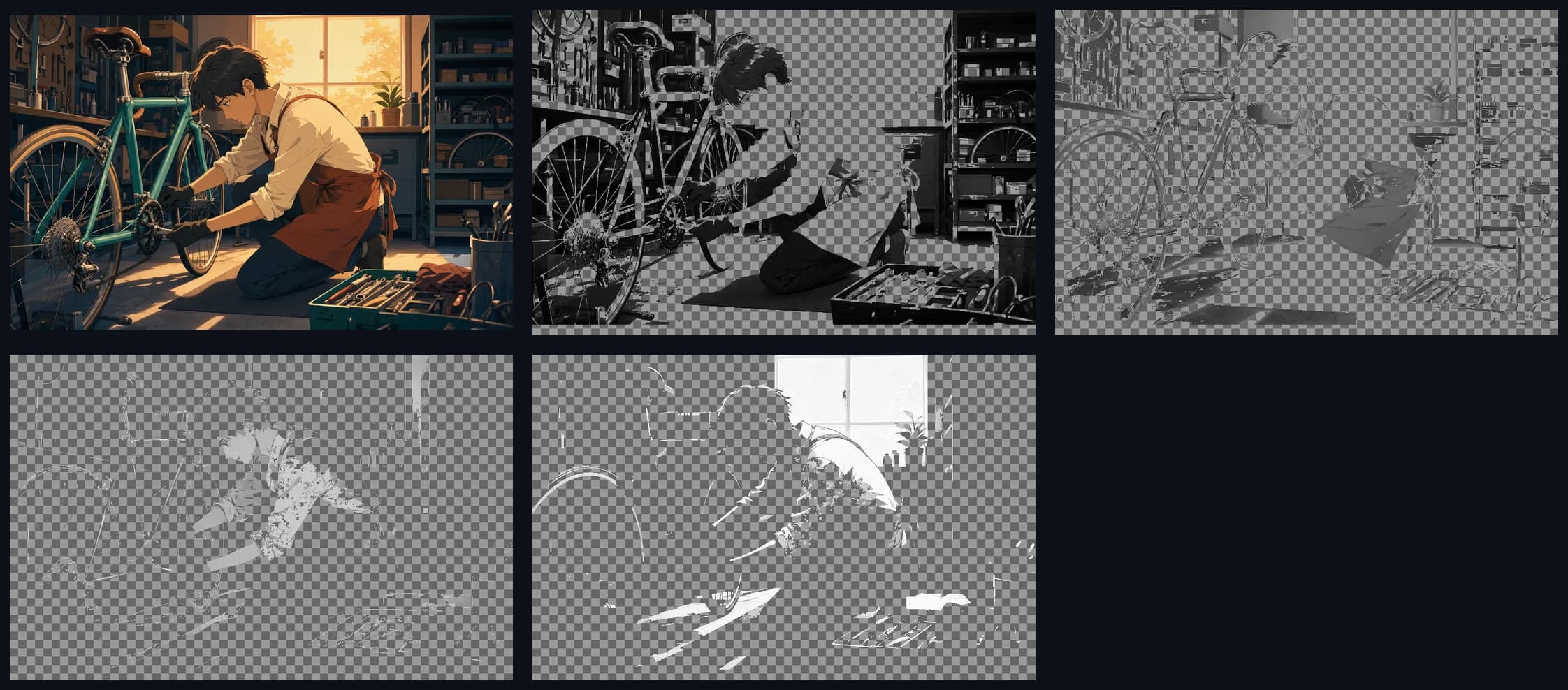
This splitter loads the selected file through browser APIs, creates object URLs and canvases locally, and does not send the source to an application endpoint in this implementation. Removing or replacing the image revokes its temporary object URL; closing the page clears the working state. Browser extensions, device policies, screenshots, downloads, and other site tools have their own behavior, so local processing here is not a universal privacy promise about the entire device or website.
Local processing does not grant permission to modify an image. Use artwork you created, licensed, or are authorized to transform. Public availability is not the same as a commercial license. Record the creator, source, license or consent, intended use, and any restrictions. If the image contains a real person, private information, a protected character, a client asset, or confidential production work, follow the relevant agreement before loading, modifying, or sharing it.
Before release, inspect the recomposed artwork for missing credits, accidental logos, signatures, watermarks, cultural symbols, and changes that alter meaning. Describe significant edits when required. For accessible use, write alt text for the final visible image rather than narrating the hidden layer stack unless the layers themselves are instructional content. When the derived asset moves into advertising, merchandise, or publication, recheck the source rights and production record.