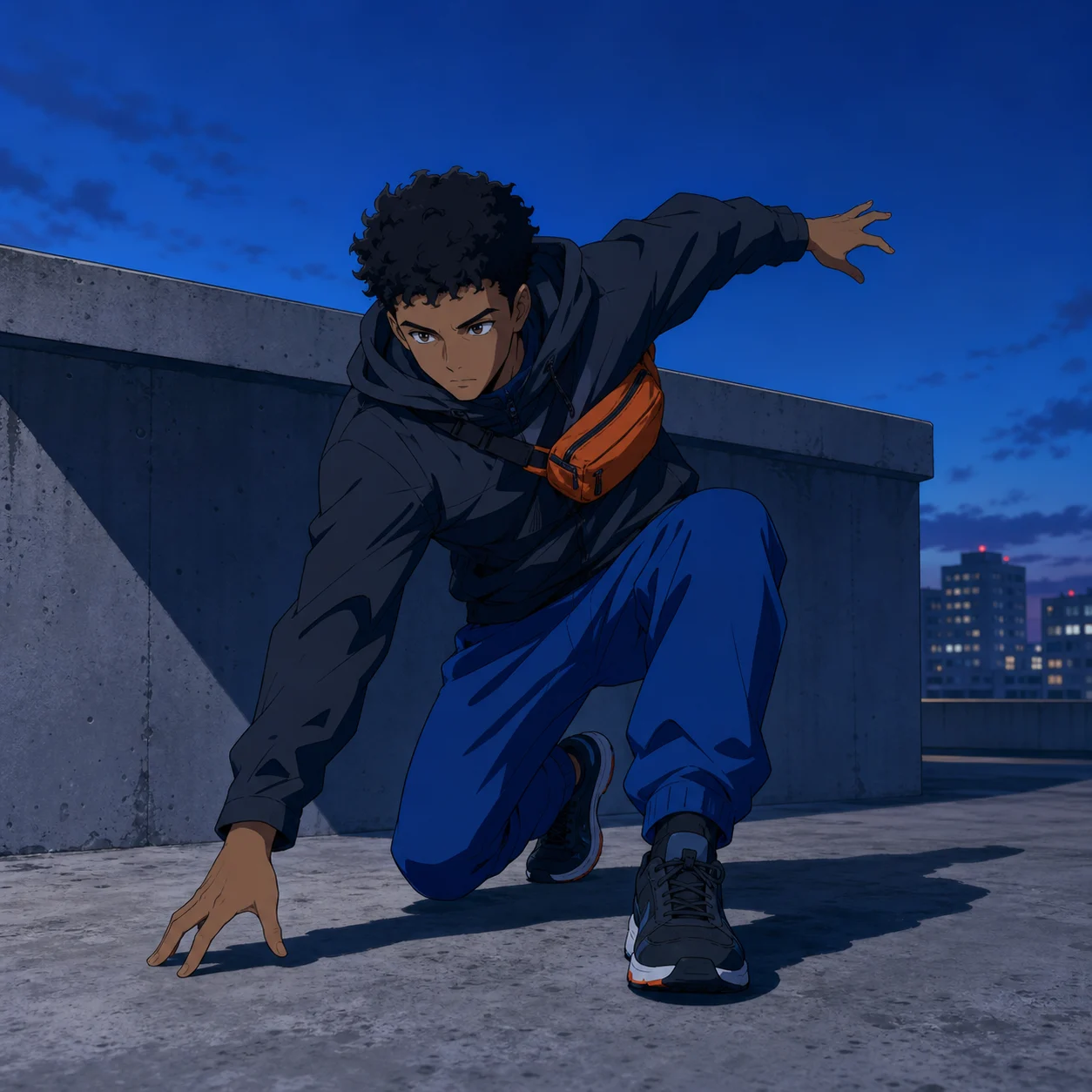
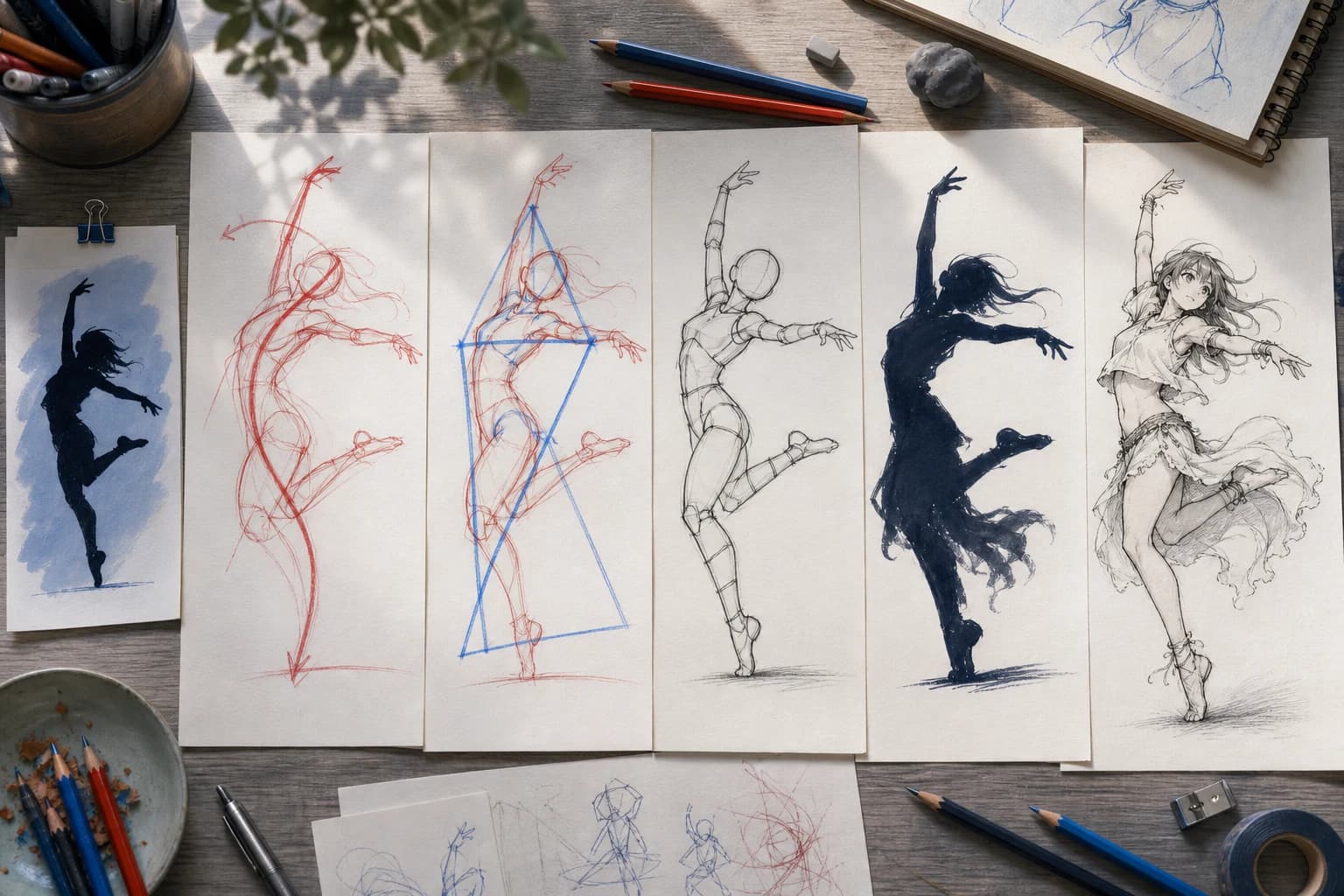
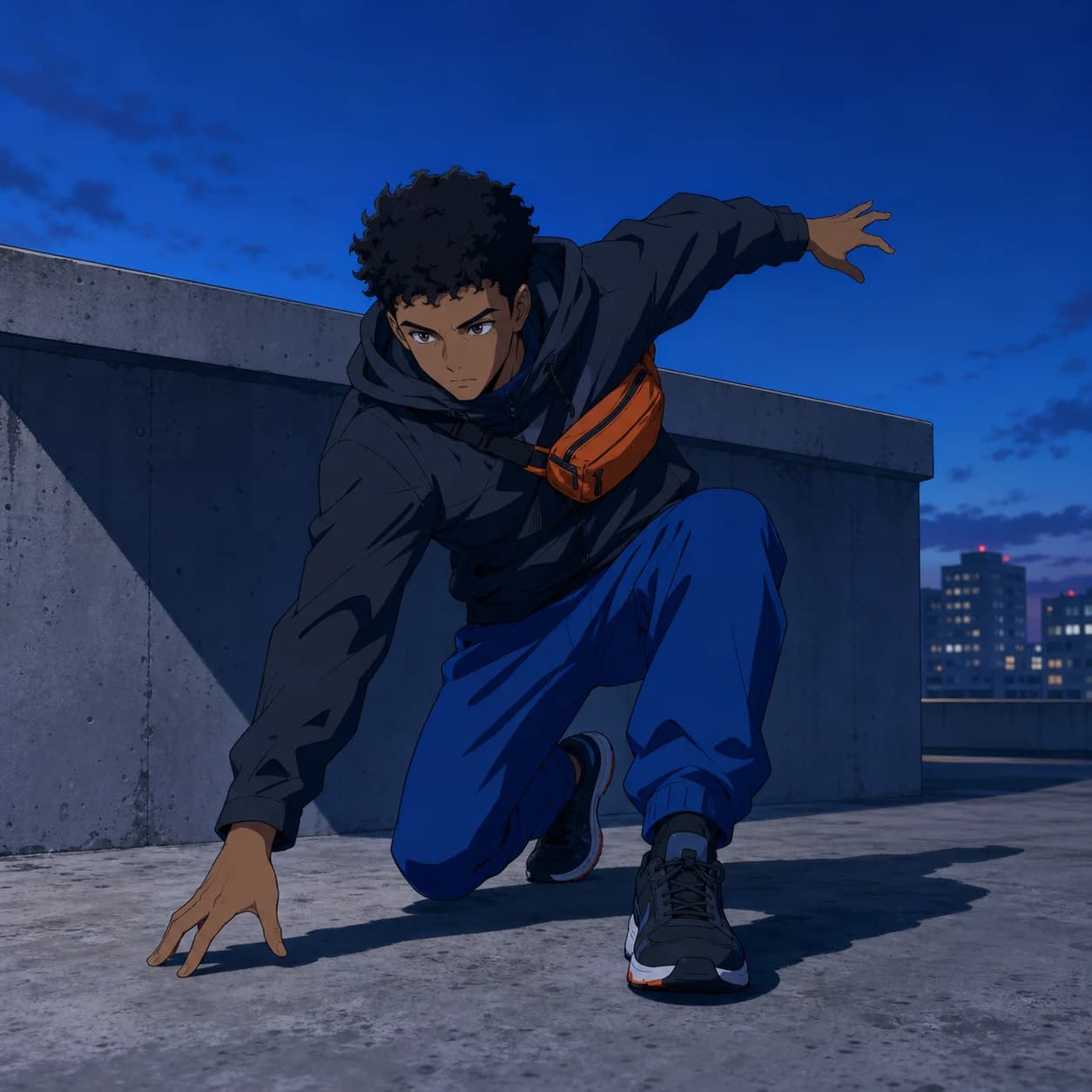
When the overall action reads but one contact fails, keep the successful phase, camera, and character anchors. Rewrite only the support or grip instruction. When the silhouette is crowded, change limb spacing or view before rewriting the costume. Controlled revision makes outputs comparable. Replacing the entire prompt after every result may create novelty, but it does not teach you which instruction affected balance, framing, or continuity.
For a set of key poses, write a small fixed character block and a separate action block. The fixed block can include adult age, silhouette, hairstyle, palette, one accessory, and costume shape. The action block changes phase, force, support, view, and crop. This can improve art-direction consistency, but it is not an identity lock. Select one approved image as a visual anchor and expect to redraw faces, proportions, clothing construction, and props across the final set.
Keep a review table with prompt version, intended change, result path, pass or fail, and the specific reason. Useful reasons include readable action, support foot missing, hand fused to prop, camera hid the contact, face drifted, or background tangent weakened silhouette. Avoid notes such as “bad” or “more dynamic.” Specific observations shorten the next brief and create a traceable record for collaborators who need to understand why one pose was selected.